
Blog
What That Garage Door Noise Is Actually Telling You
Poway's 1967-1992 housing stock and mild climate create specific noise patterns in garage doors. Here's what grinding, popping, and rattling actually mean.
What Most People Get Wrong
Most homeowners treat every garage door noise the same way: spray some lubricant on it and hope. That works sometimes, but in Poway it misses the bigger pattern. The housing stock here was built mostly between 1967 and 1992, with a median build year around 1978, across the 21 named areas that make up this part of the county. That means a huge share of doors and openers in this service area are either original hardware pushing past its design life, or a second-generation replacement installed in the 1990s or 2000s that's now also due. The noise isn't random. It's the sound of hardware from a specific era finally giving up. People hear a squeak and think 'needs oil.' Often it's a roller bearing from a 40-plus-year-old track system that's worn past the point oil fixes anything. The fix depends entirely on which decade your garage belongs to, not on a generic noise-to-solution chart you'd find anywhere else. A grinding noise on a 1978-era door with its original torsion spring means something different than the same grinding on a 2005 opener with a worn gear. Treating them the same wastes a service call.
The Problem
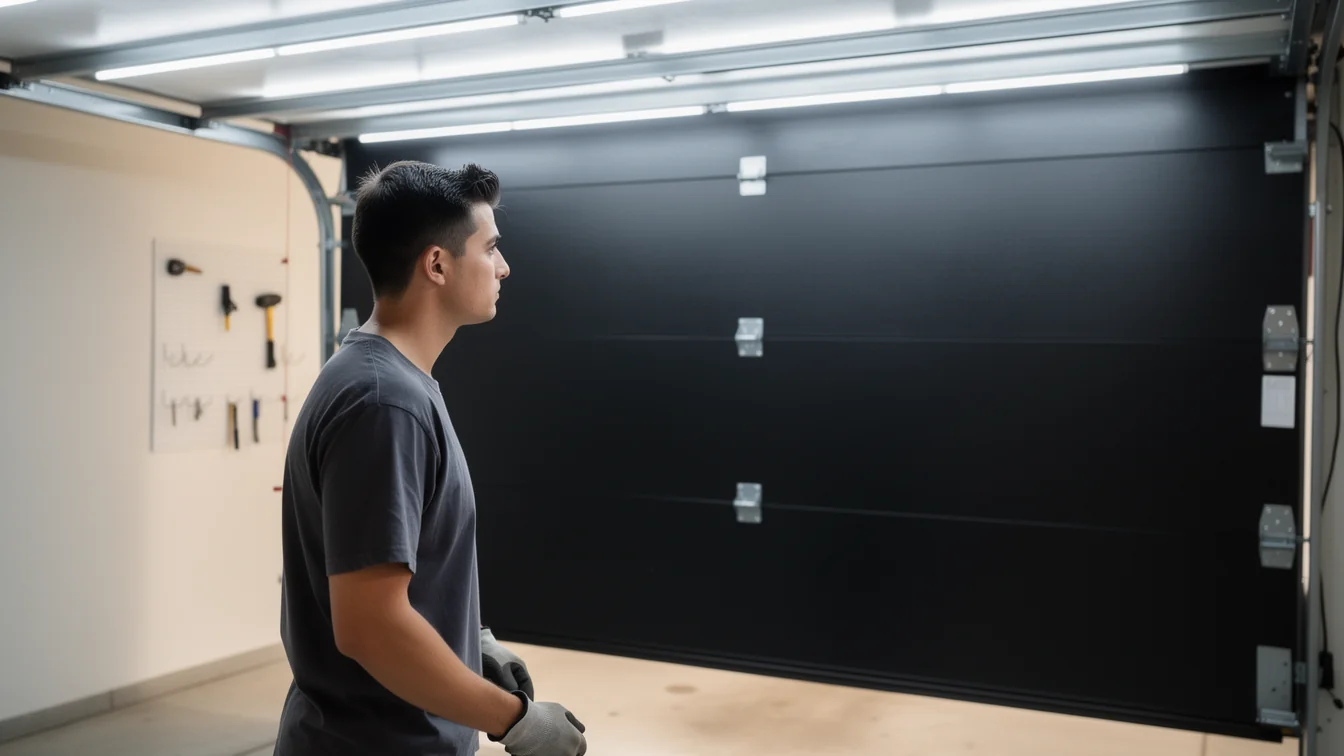
Houses built in the 1967-1992 window across Poway and the surrounding areas typically carry one of two setups: original torsion hardware that's now 30 to 55 years old, or a mid-life replacement opener bolted onto that original track. Both setups fail in predictable, noisy ways. Torsion springs from that era were often under-rated for the door weight by today's standards, so they stretch and the coils start rubbing, producing a rhythmic creak that gets worse as the spring loses tension. Chain-drive openers from the 1980s and 90s rely on a sprocket and chain combination that, once the chain stretches even slightly, slaps against the rail every cycle. That slap sound is diagnostic, not cosmetic. It tells you the chain has stretched past adjustment range, not that it needs a drop of oil. The honest limitation here: once a chain has stretched that far, tightening it usually buys a few weeks before it's back to slapping, because the links themselves have worn. At that point the chain needs replacing, not adjusting, and if the sprocket's worn too, the gear kit goes with it.
How Local Conditions Play In
Poway sits in a mild temperate band, so we don't get the freeze-thaw cycling that snaps springs or warps panels the way it does in colder climates. That's the good news. The quieter effect of mild, steady temperatures is that hardware here tends to wear out from cycle count and age rather than from weather stress, which means the failure point sneaks up on people. A spring that would announce itself with a loud bang after a hard freeze somewhere colder instead just gradually loses tension here, and the first sign is a soft, grinding creak during the lift instead of a sudden snap. Doors in this climate also don't see the rust and corrosion on tracks and hinges that humid or coastal-adjacent towns deal with, so when you do hear a metal-on-metal grind, it's much more likely to be dry bearings or a bent track than corrosion. That narrows the diagnosis. In a mild climate like this one, noise is almost always a mechanical wear story tied to the age of the hardware, not a weather story. That's useful, because it means the fix is usually parts and labor, not emergency weatherproofing.
What to Check
Start by placing the noise in the cycle. A squeal right at the start of the lift usually points to the spring or the bearing plates at the top of the torsion shaft. A rhythmic thump throughout the whole travel points to a bent track section or a flat spot worn into a roller. A slapping sound near the opener itself is almost always chain or belt slack. If your home falls in the 1967-1992 build range common across this area, check the spring cones first for visible rust streaks or stretched coils, since original torsion hardware this old is well past its rated cycle life. If you've already replaced the opener once, listen for the gear noise specifically; a whining opener motor with no corresponding door noise usually means the internal gear kit is worn, which is a $20 part but a real teardown job. Don't keep running a door that grinds on every cycle hoping it resolves itself; a spring under strain doesn't get safer with more cycles, it gets closer to failing under load, and that's the one noise that's genuinely dangerous to ignore.
Questions
Common questions
My garage door makes a loud bang when it closes. Is that the spring?
Not usually the spring itself, since springs in this climate tend to fail gradually rather than snap. A bang on closing is more often the door hitting the floor too hard because the travel limit or down-force setting has drifted, or a loose hinge letting a panel slap. Worth checking the opener's close-force setting before assuming spring failure.
Why does my opener grind but the door still opens fine?
That's usually the opener's internal gear kit wearing out, common in openers installed as mid-life replacements on older Poway homes. The motor can still generate enough torque to move the door even with a chewed gear, but the grinding will get louder and eventually the gear will strip completely, leaving the door stuck.
Is it normal for an original 1970s-80s door to be this noisy?
It's common, not normal in the sense of harmless. Original torsion hardware from that era is well past typical service life, and the noise is the hardware telling you it's worn, not just dry. At that age, most of what you're hearing is metal fatigue in springs, bearings, or rollers rather than something a lubricant fixes for good.
Recommendation
You Might Also Like
More garage door guides for Poway homeowners.
What an Older Door in Poway Is Actually Worth Fixing
Poway homes mostly date 1967-1992.
Read guide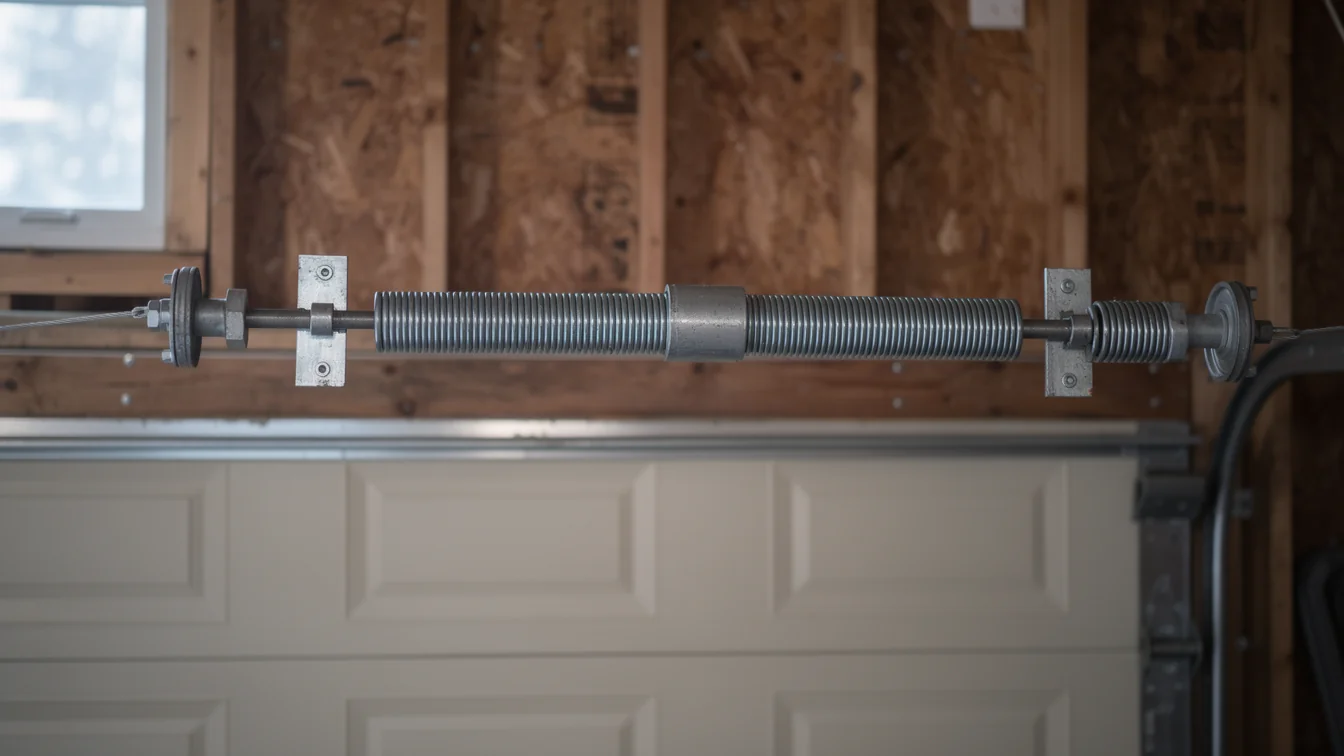
When a Spring Goes in Cold Weather: A Poway Homeowner's Guide
Poway homes built between 1967 and 1992 still run original torsion springs.
Read guide
Why So Many Poway Garages Still Have Uninsulated Doors
Many Poway homes date to the 1960s-1980s, before insulation standards applied to garage doors.
Read guideReady when you are
Need a garage door sorted in Poway?
Poway Garage Door Pros repairs and installs garage doors, springs and openers in Poway, CA and the surrounding area.