
Blog
When a Spring Goes in Cold Weather: A Poway Homeowner's Guide
Poway homes built between 1967 and 1992 still run original torsion springs. Here's why a cold night in this mild climate is often the final stress that snaps one.
What Most People Get Wrong
Most homeowners here figure Poway's mild temperate climate means cold-weather spring failures are a somewhere-else problem - a Minnesota thing, not a San Diego County thing. That assumption is why so many people get caught off guard when a spring lets go on a chilly morning.
The mild band doesn't mean flat. It means the swings are smaller in degree but still real, and a torsion spring doesn't need a hard freeze to fail - it needs one more cold cycle after years of warm ones. The other thing people get wrong is thinking a quiet door is a healthy door. Plenty of houses on this side of the county went up between 1967 and 1992, and a spring that's been doing its job since the Carter administration can look fine right up until the morning it snaps. Age plus a cold snap is a combination, not two separate problems. Treating them as unrelated is how a routine lift turns into a door that won't open at all, with a car trapped behind it and no warning the night before.
The Problem
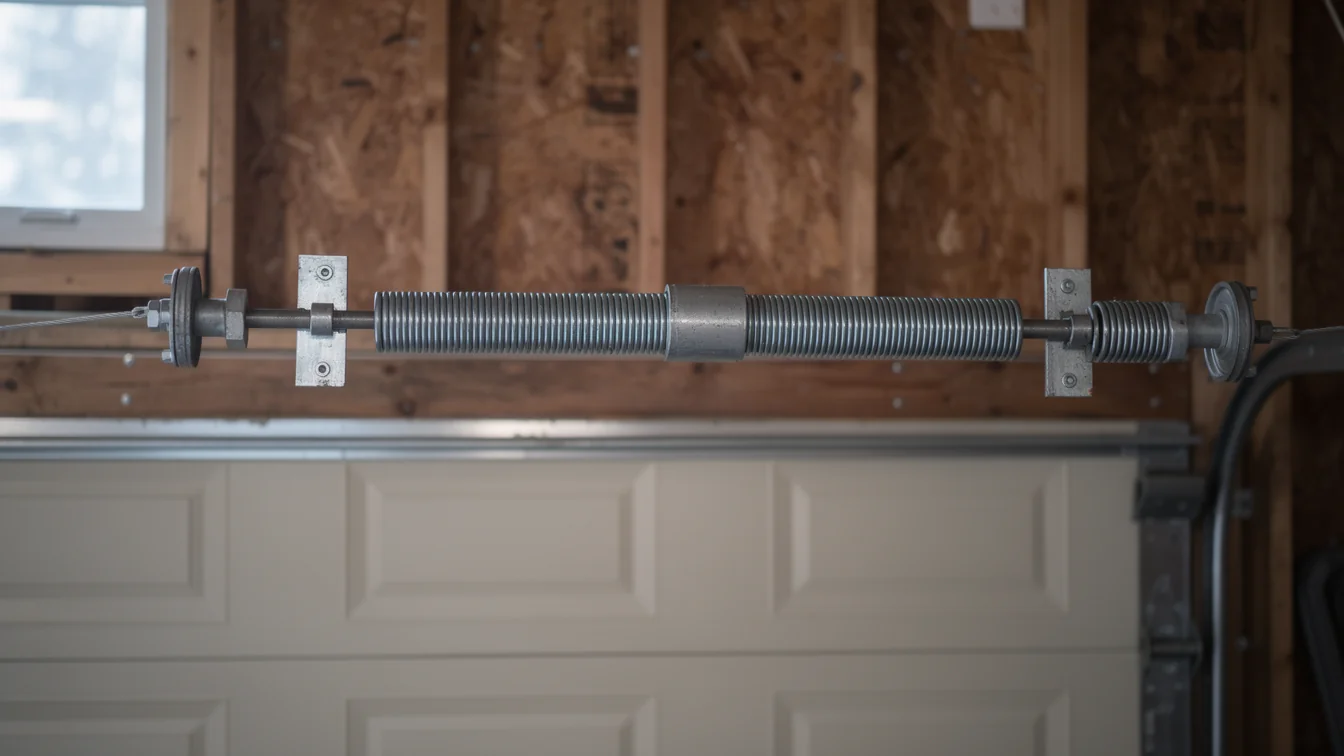
Spring steel contracts in the cold. That's physics, not weather drama. A torsion spring that's already fatigued from decades of cycling has less give left in it, and the metal is measurably stiffer on a cold morning than on a warm afternoon. Stack those two facts together and the spring that's been slowly dying since some point in the 1970s or 80s finally gives out - not because of one freak event, but because the cold morning asked for a little more flex than the spring had left.
This matters more in Poway than it would in a neighborhood built in the last decade, because so much of the housing stock here traces back to that same 1967-1992 build window. A lot of these doors are running hardware that's never been swapped out. We don't know the exact spring on your door without looking at it - gauge, wire diameter, and cycle count all vary - but the pattern of "older house, original spring, cold morning" is one we see over and over in this area.
How Local Conditions Play In
Poway sits inland, and that matters more than people think. Coastal communities like Del Mar and Solana Beach, both around 14 miles away, get the ocean's moderating effect on temperature - mild days, mild nights, small swings. Poway doesn't get that same buffer. Even within a broadly mild temperate climate band, inland towns run a wider day-to-night spread than the coast does, and that wider swing is exactly what stresses a tired spring.
It's not dramatic cold. Nobody here is scraping ice off a windshield most mornings. But a spring that spent a summer afternoon at 85 degrees and now sits through a 40-degree pre-dawn hour is working through a bigger temperature range than its coastal counterparts, cycle after cycle, year after year. Over the life of a spring installed when a lot of this area's housing went up - the median build year lands around 1978 - that repeated swing adds up. It's one more reason a spring here reaches the end of its life a little differently than one on a house a few miles toward the water.
What to Check
Look at the coils. Gaps between them, rust streaks, or a spring that looks stretched instead of tightly wound are signs it's near the end. Listen when the door runs - a popping or grinding sound on a cold morning is often the spring telling you it's working harder than it should.
Check the age of the door against the age of the house if you know it. If your house is part of that 1960s-70s wave that makes up so much of this area's stock, and the door has never been replaced, the spring is probably original or close to it. That's not a reason to panic, but it's a reason to look.
Here's the honest limit: don't try to adjust or replace a torsion spring yourself. It's under enough tension to cause real injury, and that's true whether it's 40 degrees out or 80. If you see the warning signs above, get it looked at before it fails on its own schedule instead of yours.
Questions
Common questions
Does Poway really get cold enough to break a garage door spring?
It doesn't need a hard freeze. Poway's mild temperate climate still swings further overnight than coastal towns like Del Mar or Solana Beach because there's no ocean nearby to buffer it. A spring already worn down from years of use often fails on one of those colder mornings, not because of extreme cold but because it had little margin left.
How do I know if my spring is original to the house?
If your house dates to the 1967-1992 window that covers most of this area and the garage door has never been replaced, there's a good chance the spring is original or close to it. We can't tell you the exact age without looking at the hardware, but that build era is a strong clue worth checking.
Can I adjust the spring myself before it breaks?
No. A torsion spring holds enough tension to cause serious injury regardless of the outside temperature. If you're seeing gaps in the coils, rust, or hearing new noise when the door runs, that's a sign to get it inspected rather than something to adjust yourself.
Recommendation
You Might Also Like
More garage door guides for Poway homeowners.
Why a Door Goes Off Track in a Poway Garage
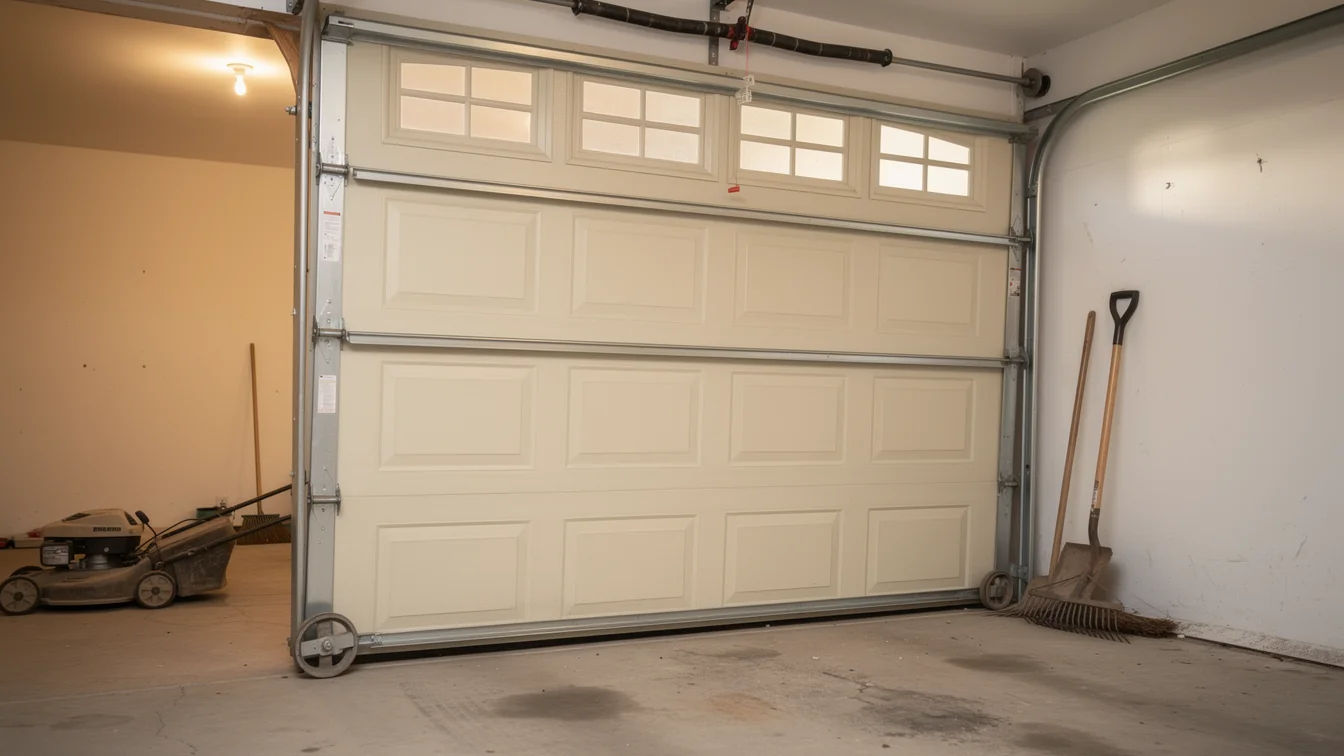
Poway homes built mostly between 1967 and 1992 have original track hardware that wasn't designed for today's heavier doors.
Read guide
What a Service Call Covers in Poway, CA
Poway Garage Door Pros breaks down what a service call covers for homes built 1967-1992, from spring checks to track alignment in Poway's mild climate.
Read guide
Openers, Power Cuts, and the Houses Poway Actually Has
Poway homes built mostly between 1967 and 1992 pair openers with wiring and hardware that react differently to power cuts.
Read guideReady when you are
Need a garage door sorted in Poway?
Poway Garage Door Pros repairs and installs garage doors, springs and openers in Poway, CA and the surrounding area.